How Much Does It Cost to Make a Fitness App?
Fitness app development cost for a basic MVP lies between $15,000 to $40,000, moving forward, mid-range apps can cost up to $100,000, while advanced AI-powered platforms start from $100,000, reaching to $300,000+.
Digital fitness solutions have quietly integrated into the daily habits of millions of users across the USA. They are mostly used for workout tracking, following meal plans, or coaching through AI-powered recommendation systems. As more people are shifting towards digital health and wellness solutions, the fitness app market is growing rapidly, already valued at over $12 billions, creating great business opportunities.
If you are looking to take advantage of this thriving industry, the first question that comes to every founder’s mind is how much does it cost to make a fitness app?
Honestly, the fitness app development cost varies for every project. It is influenced by factors like features, design complexity, level of integration, third-party APIs, and a lot more, which we will discuss later in this blog. Most of the time, businesses prefer to work with an experienced fitness app development company. The purpose is not just coding, but to develop a reliable, maintainable, and cost-efficient product launch.
If you want a detailed analysis of the cost to develop a fitness app, then this guide is for you. It will provide where exactly your investment will go, factors that influence it, and practical ways to reduce your fitness app development cost. Let’s start with a quick overview.
Quick Answer: How Much Does It Cost to Develop a Fitness App?
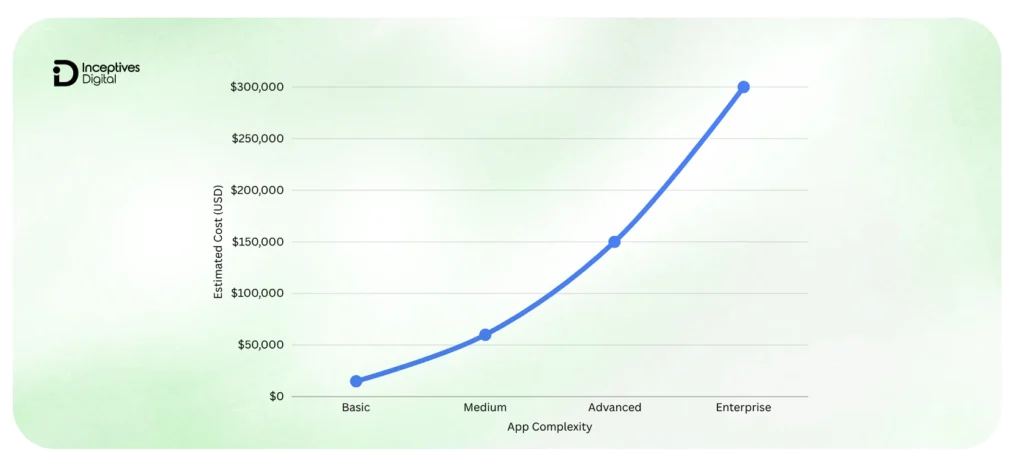
If you are not up for reviewing innumerable details concerned with the cost to develop a fitness app, the section below presents an overall fitness app development cost for you. A quick answer would be that it depends on factors such as complexity, number of features, and team composition, etc. Usually, the fitness app development cost lies between $15,000 to $300,000+ price bracket.
For example, a basic fitness tracker app costs less than an app with advanced AI-based features and wearable device integrations. Here is an overview of fitness app development cost estimates based on app types.
Fitness App Development Cost Estimate
| App Type | Fitness App Development Cost Estimate (USD) | Timeline |
| Basic App | $15,000 – $40,000 | 2–4 months |
| Mid-Level App | $40,000 – $100,000 | 4–8 months |
| Advanced App | $100,000 – $300,000+ | 8–12+ months |
Key Points to Understand Before Estimating Your Budget
- The final cost heavily depends on features, platform (iOS, Android, or cross-platform), and complexity of the app.
- Team location also matters, because hourly rates vary for regions, like working with a US-based mobile app development company will increase the cost due to the higher hourly rates.
- MVP development at the start is a good way to reduce initial spending and validate your mobile app idea.
Fitness App Development Cost Breakdown: What You’re Really Paying For
A successful fitness app development journey is not limited to just coding. It involves planning, strategy, and maintenance after the launch as well. Being aware of what the factors actually are that influence the fitness app development cost, planning your budget, and avoiding unnecessary spending becomes a lot easier. Below are the major factors that can reduce or increase your development cost, depending on how you deal with them.
1. App Complexity and Feature Scope
Complexity is one of the primary factors that impact the fitness app development cost. Adding extra features requires extra resources, which eventually increases the development cost. So you have to be very precise in choosing the features.
The best way to start is with core features and add more as user demands increase. Suppose a basic app that tracks progress and workout logs is easier and quicker to build, compared to an app with AI-powered coaching, real-time analytics, and data-backed insights, which takes more development time and budget. Remember, the more you customize the app, the more it will cost.
2. Platform Choice (iOS, Android, or Cross-Platform)
Another major factor is the platform that directly affects the fitness app development timeline and budget. You have to decide between native and cross-platform app development.
Native Approach
Native development means you have to develop separate applications for both iOS and Android. Two apps mean more development work, a longer time, and higher investment. But it ensures a high-performing application with a pleasing user experience.
Cross-platform Approach
When your audience is distributed across the platforms, and your aim is a quick launch, a cross-platform approach is the best option. These apps operate through a single code base on both iOS and Android operating systems, which means fewer development efforts and time. Although you have to compromise in some aspects because it has limited capabilities compared to the native approach.
3. UI/UX Design and User Experience
User engagement is a make-or-break for fitness applications. Visuals are not enough; your app should keep the user motivated and foster consistency through strategic UI/UX design.
- Template-based design: Faster and more affordable but less unique.
- Custom UI/UX: Personalized experience with better engagement, branding, and retention.
Elements like progress visualization, gamification, and intuitive navigation single out higher design fees by going the extra mile in user retention.
4. Development Team Location and Rates
Due to the varying hourly rates across regions, the location of your mobile app development team affects the overall budget as well. But don’t go straight for lower hourly rates. It is important to hire a balanced team, both technically and experience-wise. The figure below presents the hourly rates across different regions.
| Region | Hourly Rate (USD) |
| USA / North America | $70 – $200+ / hr |
| Western Europe | $60 – $120 / hr |
| Eastern Europe | $30 – $65 / hr |
| Latin America | $25 – $60 / hr |
| Asia (India, Pakistan, SEA) | $20 – $50 / hr |
| Australia / New Zealand | $70 – $150 / hr |
5. Third-Party Integrations
Most modern fitness apps rely on integrations to enhance functionality.
- Payment gateways for subscriptions and in-app purchases
- Wearable integrations like the Fitbit fitness tracker and the Apple Health platform
- Nutrition and tracking APIs for calorie counting and meal planning
Every new integration requires additional development work, testing activities, and sometimes incurs permanent licensing expenses.
Understanding these cost elements allows you to identify which cost elements are most relevant for the success of your fitness application.
Key Features That Influence the Cost of Developing a Fitness App
The feature list functions as the development cost blueprint for building a fitness application. Every new feature addition extends both the development expenses and timeline. The initial feature selection process requires careful execution because it protects against expensive future development changes.
Must-Have Features for an MVP
The best approach to testing and collecting user feedback is launching a prototype before releasing the final product. Your fitness application should use the minimum viable product (MVP) as its prototype. It helps in validating your mobile app idea without overspending. Below are the core features enough for an MVP to test the market and gather real user feedback.
- User registration & profiles
- Workout tracking
- Goal setting
- Push notifications
Advanced Features That Increase Fitness App Development Costs
When an application has reached a cruising state, when users consistently interact with it, that’s the ideal timing to start introducing advanced features aimed at increasing user activity and retention. Although it can increase the development cost, but are worth it if they are keeping user coming back. These are the advanced features that can really drive engagement, but require intricate backend systems, real-time data processing, and higher development efforts.
- AI-based recommendations
- Live workout streaming
- Social sharing and communities
- Gamification
Fitness App Feature Cost Breakdown
| Feature | Estimated Cost |
| User Profiles | $2,000 – $5,000 |
| Workout Tracking | $5,000 – $15,000 |
| AI Features | $20,000+ |
| Live Streaming | $10,000 – $25,000 |
Beginning with just the essential features and advancing gradually is the smartest approach, reducing the initial investment and ensuring feature development that aligns with your users’ requirements.
AI Fitness App Development Cost: What Adds to the Price?
AI is the difference between a basic tracking tool and an intelligent, personalized fitness tool. But you should be aware that this level of sophistication notably increases the development cost, because it requires data processing, model training, and continuous optimization.
Key Cost Drivers in AI Fitness Apps
- Personalized recommendations
- Machine learning models
- Real-time analytics
Estimated Cost Impact
AI functionalities could make a big dent in your budget, consequent on the depth of data that may be needed in your application:
- Estimated addition: $20,000 – $100,000+
Your final fitness app development budget will be affected by factors including the difficulty of algorithms, the depth of customization, and your choice between new and pre-trained models.
Cost to Develop a Fitness App by Type
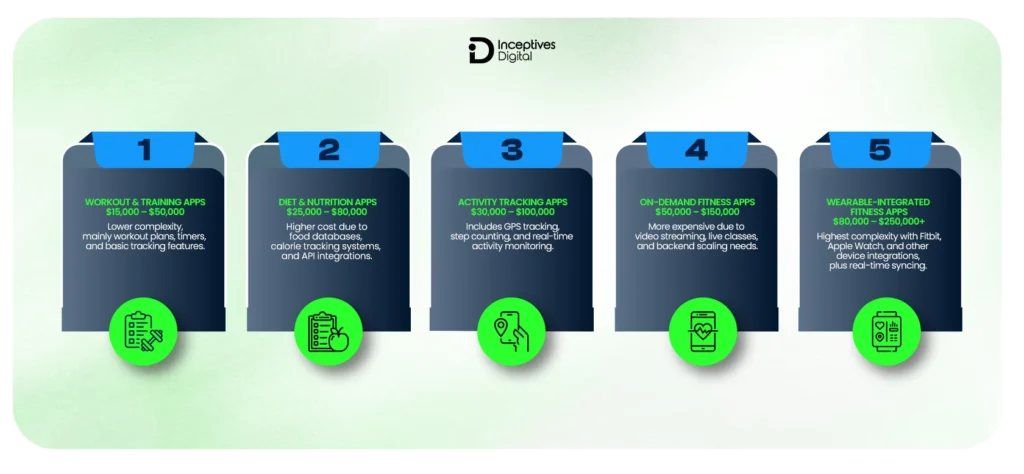
Before estimating your fitness app development cost, it is important to have a look at the cost estimates of common app types. Because apps differ in terms of expenses, due to different technical requirements. So here are the common types of fitness applications with their cost estimates.
1. Workout & Training Apps
- Lower complexity
- Lower fitness app development cost estimate
- Workout and training app cost: $10,000 – $40,000
These applications provide guided workouts with training routines and essential tracking features, making them one of the most convenient entry points.
2. Diet & Nutrition Apps
- API integrations increase cost
- Estimated cost: $15,000 – $50,000
These increase development and running costs through third-party integration for calorie tracking, meal plans, and nutritional databases.
3. Activity Tracking Apps
- GPS and motion tracking
- Estimated cost: $20,000 – $70,000
These apps need advanced development and testing for real-time tracking capabilities and to process data from sensors.
4. On-Demand Fitness Apps
- Video streaming increases development cost
- Estimated cost: $40,000 – $120,000+
Budget increases due to the development of the streaming system, content distribution, and live operation capabilities.
5. Wearable-Integrated Fitness Apps
- Sync with devices like a Fitbit fitness tracker
- Higher complexity and cost
- Estimated cost: $50,000 – $150,000+
These are the most expensive fitness apps due to requirements like real-time syncing and compatibility layers, making these complex and resource-intensive.
Understanding the Upper Range of Fitness App Development Costs (Real App Examples)
By looking at the cost estimates of the existing fitness apps that are dominating the market, you can understand what to expect in terms of cost if you want to compete with them. Real-world examples are always the best when you are willing to practically pursue an idea. So here are the fitness app development costs estimates of some famous fitness applications in the market.
Cost to Develop a Fitness App Like a Fitbit fitness tracker
- Wearable syncing + advanced health analytics
- Estimated cost: $80,000 – $250,000+
Cost to Develop an App Like Eat Fit
- Nutrition tracking + subscription-based monetization
- Estimated cost: $50,000 – $150,000
Cost to Develop a Fitness App Like PlugShare
- Location-based features + community-driven platform
- Estimated cost: $60,000 – $180,000
Cost to Develop an App Like MyFitnessPal
Estimated cost: $40,000 – $250,000
Calorie + Fitness Tracking
Reviewing these examples would help you gain a practical sense of the scalability of costs for fitness app development as the components get complex and user demands increase.
Fitness App Development Costs by Development Stages
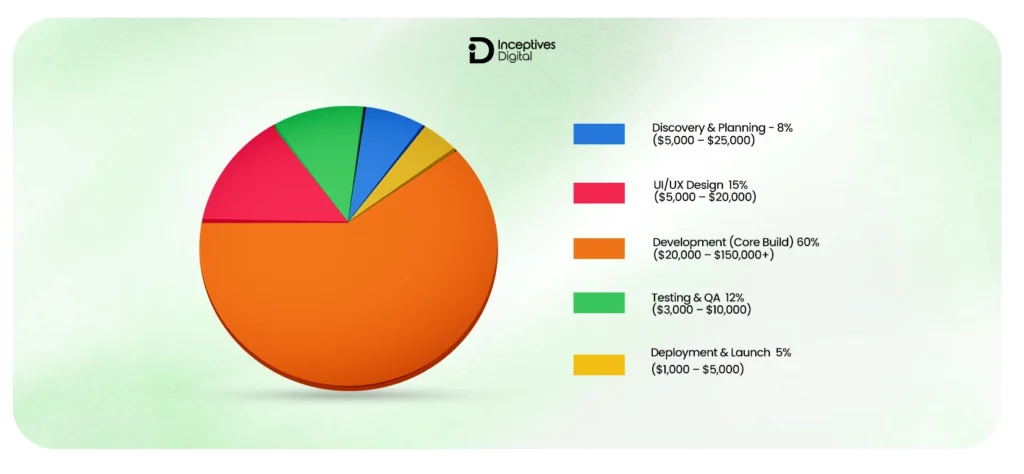
Having a clear knowledge of the costs you spend at each stage of the process provides a better grip on controlling the budget and distributing it in a better strategic way. Below is a detailed stage-wise breakdown of the fitness app development cost.
1. Discovery & Planning
- Estimated cost: $3,000 – $10,000
This stage is the first building block of your fitness app idea. It includes creating a blueprint that defines your app goals, targeted users, core features, technical requirements, and overall roadmap. A well-researched and comprehensive plan ensures a risk-free development process, keeping everything aligned.
2. UI/UX Design
- Estimated cost: $5,000 – $20,000
Once you are done with the planning, the first practical step is to visualize your app. Through modern tools (Figma, Adobe XD), designers create wireframes, user flows, and final user interface to make sure it is easy to navigate and will keep the user engaged. For fitness applications, design is the most crucial aspect that keeps users motivated and active.
3. Development
- The largest portion of the fitness app development cost
- Estimated cost: $20,000 – $150,000+
After the design, your app reaches the development window. It is where your app is transformed into a functioning piece from a design. It includes developing the frontend, backend, APIs, databases, and integrations if required. This is the stage that costs more than any stage.
4. Testing & QA
- Performance checks, bug fixing, and stability testing
- Estimated cost: Typically 10%–20% of total development cost
Quality assurance testing confirms that the application operates correctly on different devices and functions properly in actual user environments. It includes testing functionality, performance, conducting security assessments, and resolving bugs before the product enters the market, which helps to prevent user problems.
5. Deployment
- App store launch, backend setup, and production release
- Estimated cost: $1,000 – $5,000
Finally, after it is confirmed that the app is ready to launch on the Apple App Store and Google Play Store. The DevOps team configures the servers and sets up production environments to make sure the app is properly released without any technical problems.
Hidden Fitness App Development Costs You Should Plan For
Missing out on the post-launch and some other hidden expenses is a common mistake companies make when estimating fitness app development costs. To avoid any surprises and budget overruns, the following expenses must be included in your estimation process for developing your fitness solution.
1. Ongoing Maintenance
- Estimated App Maintenance Cost: 15–20% of the total development cost annually
Fixing bugs, improving performance, and rolling out version updates regularly are important to keep the app functioning and stable.
2. Cloud Hosting and Infrastructure
- Estimated cost: $500 – $5,000+ per month (depending on scale)
Fitness applications often handle large amounts of user data, media, and data coming in from multiple sources simultaneously, providing very little margin for error, which is why they require efficient cloud servers, storage, and bandwidth.
3. Third-Party API Costs
- Estimated cost: Varies based on usage
Payment gateways, nutritional databases, and wearable syncing tools carry integration fees that burgeon as your user base expands with subscription and usage-based pricing.
4. Feature Updates and Scaling
- Estimated cost: Ongoing and variable
Your application will require development resources, including creating new features, improving current features, and expanding its infrastructure to accommodate increasing user traffic.
5. Marketing and User Acquisition
- Estimated cost: $1,000 – $20,000+ per month
The app launch is the starting point for the entire process. User acquisition and retention require the implementation of paid advertising, app store optimization, influencer marketing, and other promotional campaigns, which add up to the overall development cost.
Planning for these disguised expenses in advance helps avoid surprises in your budget, keeping your app competitive for a long period of time.
How to Reduce the Cost to Develop a Fitness App Without Compromising Quality
You can control the fitness app development cost through effective management without needing to reduce quality standards. It requires you to make better initial decisions in spending funds on what provides actual benefits.
Start with an MVP
Start by creating a basic product that includes only necessary features. An MVP will assist you in testing your concept while collecting user input, as well as avoiding unnecessary spending.
Use Cross-Platform Frameworks
Creating a single app that caters equally well to both Android and iOS users can decrease development expense and time, as compared to developing separate native applications for each.
Prioritize Core Features
You should start by building the features that directly improve user experience and user engagement. Your essential business needs will receive financial backing through this process.
Avoid Overbuilding Early
The initial attraction to advanced features needs to be avoided because it creates expensive project delays. Start with basic functionality and then develop additional features according to actual user needs.
Use Existing Integrations
Use existing payment, analytics, and tracking solutions instead of creating new systems from the ground up. It needs less work to complete while the product remains at the same high standards.
Fitness App Development Cost Estimate by Timeline
Fitness app development time and its total budget increase with each additional feature. Understanding the relationship between these two factors enables you to establish true delivery times and budget limits.
Development Timeline by App Complexity
| App Complexity | Timeline |
| Basic | 2–4 months |
| Medium | 4–8 months |
| Advanced | 8–12+ months |
Monetization Models to Recover Your Fitness App Development Cost
Choosing the right monetization strategies is key to turning your fitness app into a sustainable revenue-generating product. The right model depends on your target audience, feature set, and long-term growth plan.
Subscription Model
- Monthly or yearly recurring payments
- Ideal for apps offering ongoing value like workout plans, coaching, or premium content
Freemium Model
- Free basic version with paid premium features
- Helps attract a larger user base while converting engaged users into paying customers
In-App Purchases
- One-time purchases for specific features, plans, or content
- Works well for personalized workout plans, diet charts, or exclusive sessions
Ads and Brand Partnerships
- Revenue through in-app ads or collaborations with fitness brands
- Suitable for apps with a large active user base
A well-planned mix of monetization and marketing strategies ensures you not only recover your fitness app development cost but also create consistent long-term revenue.
How to Get an Accurate Fitness App Development Cost Estimate
Getting a realistic cost estimate isn’t about guessing a number. It comes down to clearly defining what you want to build and how you plan to build it.
Define Your Feature Scope
Start by listing the exact features your app needs. The more detailed your scope, the more accurate your estimate will be. Separating must-have features from optional ones also helps control costs.
Choose Platforms
Decide whether you want to build for iOS, Android, or both. This choice directly impacts development time, cost, and the overall approach (native vs cross-platform).
Set a Realistic Timeline
Your deadline affects team size, development speed, and ultimately cost. A tight timeline may require more resources, while a flexible one allows for a more cost-efficient approach.
Consult a Development Team
The most reliable estimates come from experienced development teams. They can assess your requirements, suggest improvements, and provide a detailed cost breakdown based on real-world experience.
The clearer your inputs, the more precise your estimate will be. Taking time at this stage helps you avoid budget surprises and keeps your project on track from day one.
Final Thoughts on Fitness App Development Costs
Building a fitness app is not just about estimating a single number. It’s about understanding how features, app type, development stages, and long-term costs all come together to shape your total investment. From MVP planning to advanced AI integrations, every decision influences both your budget and your app’s success. When approached strategically, you can control costs, prioritize what matters, and build a product that delivers real value to users.
If you’re planning to move forward, the right guidance can make all the difference. Working with a team that offers reliable fitness app development services helps you turn ideas into a clear roadmap, avoid costly missteps, and build with confidence. Whether you’re starting small or aiming for a full-scale platform, having the right support ensures your investment translates into a product that’s built to grow.
CTA SECTION START
cta title: Start Your Fitness App Journey With a Clear Cost Estimate
cta des: Get a clear cost estimate, feature roadmap, and expert guidance to launch your fitness app with confidence.
cta button: Discuss Your App Idea
CTA SECTION END
FAQs About Fitness App Development Cost
The cost can range from $15,000 to $300,000+, depending on the app’s complexity, features, and platforms. Basic apps cost less, while advanced apps with AI, integrations, and real-time features require a higher budget.
The biggest factors include feature scope, app complexity, platform choice (iOS, Android, or both), third-party integrations, and the development team’s location and expertise.
Yes, building an MVP helps you launch with essential features only, reducing initial costs. It also allows you to test your idea and invest further based on real user feedback.
AI features can add anywhere from $20,000 to $100,000+ to your total cost, depending on the level of personalization, data processing, and complexity of the algorithms used.
For most businesses, a realistic estimate falls between $20,000 and $150,000 for a mid-level app, while more advanced solutions can go significantly higher.
SIDEBAR LIST START
- How Much Does It Cost to Make a Fitness App?
- Quick Answer: How Much Does It Cost to Develop a Fitness App?
- Fitness App Development Cost Breakdown: What You’re Really Paying For
- Key Features That Influence the Cost of Developing a Fitness App
- AI Fitness App Development Cost: What Adds to the Price?
- Cost to Develop a Fitness App by Type
- Understanding the Upper Range of Fitness App Development Costs (Real App Examples)
- Fitness App Development Costs by Development Stages
- Hidden Fitness App Development Costs You Should Plan For
- How to Reduce the Cost to Develop a Fitness App Without Compromising Quality
- Fitness App Development Cost Estimate by Timeline
- Monetization Models to Recover Your Fitness App Development Cost
- How to Get an Accurate Fitness App Development Cost Estimate
- Final Thoughts on Fitness App Development Costs
- FAQs About Fitness App Development Cost
SIDEBAR LIST END