Hey folks, as a custom software development company right here in the United States, we’ve had a front-row seat to how the ongoing Iran conflict is turning what used to feel like distant geopolitical headaches into very real line items on every project budget we touch. Cybersecurity isn’t some optional extra anymore. It’s become a straight-up national security and bottom-line necessity. And honestly, it’s pushing development timelines, hardware expenses, energy bills, and compliance work higher than we’ve seen in years.
Take a look at the latest numbers from the World Economic Forum. Their Global Cybersecurity Outlook 2026 lays it out clearly: 94 percent of leaders worldwide say artificial intelligence is now the biggest driver of change in cybersecurity, while 87 percent point to AI-related vulnerabilities as the fastest-growing risk. At the same time, the report highlights how geopolitical fragmentation is making hybrid attacks the new normal. Sixty-four percent of organizations are now baking state-linked threat scenarios directly into their risk planning. These aren’t abstract stats. They mirror exactly what our US clients are wrestling with as tensions in the Middle East ripple into digital supply chains.
Supply-chain concentration makes things even trickier. A single weak spot in a popular library or SaaS tool can cascade across thousands of businesses. That’s why our engineering teams ditched the old “patch when it breaks” mindset years ago. Zero Trust Architecture is now our default starting point. Every single access request gets verified, no matter where it comes from.
Physical Threats To Cloud Infrastructure From The Iran Conflict
The idea that the cloud was somehow untouchable? That illusion shattered in early March 2026. Iranian drone strikes directly hit Amazon Web Services facilities, two in the United Arab Emirates and one in Bahrain. These weren’t minor glitches. The attacks caused real structural damage, power outages, and service disruptions that affected banking, payments, and enterprise apps across the region. You can read the full details in reports from outlets like Fortune and Reuters.
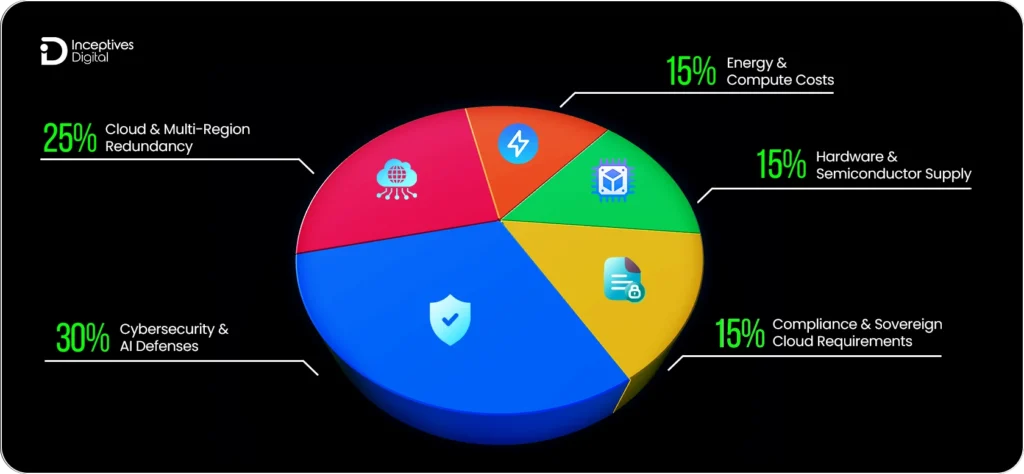
For us, building software in the US, this single event changed everything. Clients who used to be fine with single-region setups now demand full multi-region redundancy from day one. That shift alone adds 15 to 20 percent to infrastructure costs and engineering hours. The Iran conflict made proximity to active war zones a tangible risk instead of a “what if.”
Undersea cables and energy routes through the Strait of Hormuz are under the same pressure, so organizations are rushing toward domestic and sovereign data centers. We’re helping clients build in one-click data residency controls so their apps stay compliant and running even if global connections get severed.
Sovereign Cloud Requirements Adding Architectural Overhead
The numbers back this up. According to Gartner, worldwide sovereign cloud infrastructure-as-a-service spending is headed for eighty billion dollars in 2026. That’s a 35.6 percent jump from last year. Growth is especially hot in the Middle East, Mature Asia-Pacific, and Europe.
In our projects, that means we’re layering sovereign compliance into the architecture from the very first whiteboard session. Extra work on data isolation, encryption keys, and automated failover between regions? It definitely raises development costs. But with the Iran conflict ongoing, skipping it just isn’t an option for clients who need to stay operational no matter what.
IT Spending Growth Masking Rising Per-Project Costs
Even with all this volatility, global IT spending is still climbing. Gartner’s latest forecast puts worldwide spending at 6.15 trillion dollars in 2026, up 10.8 percent from 2025. Data centers are growing fastest at 31.7 percent, driven by AI infrastructure and physical hardening. Software spending is up 14.7 percent, powered by security, compliance, and agentic AI tools.
Here’s how it breaks down:
| Segment | 2026 Projected Growth | Primary Driver Linked To Iran Conflict |
| Data Center Systems | 31.7 percent | AI infrastructure plus physical hardening against threats |
| Software | 14.7 percent | Security, compliance, and agentic AI defenses |
| IT Services | 8.7 to 9.8 percent | Cloud migration and risk mitigation |
On paper, it looks like healthy growth. In reality, for us in software development, the Iran conflict is squeezing discretionary projects while forcing bigger budgets into resilience work. What feels like industry-wide expansion actually translates into noticeably higher costs for every new app we deliver.
Energy Volatility From The Conflict Raising Compute Expenses
Energy markets are feeling the strain, too. The International Energy Agency’s Electricity 2026 report warns that data-center electricity use could double from 2022 levels, potentially hitting 1,000 terawatt-hours in high-AI scenarios. Disruptions tied to the Iran conflict in the Strait of Hormuz are pushing cloud providers to pass costs straight to customers through dynamic pricing and region-specific surcharges.
On our teams, carbon-aware computing is now standard. We refactor code to move non-critical workloads to cheaper, cleaner energy windows and squeeze every last drop of efficiency out of algorithms. These changes help protect margins, but they add real development and testing time. Another direct hit to project budgets caused by the ongoing conflict.
Semiconductor And Hardware Supply Chain Disruptions
Software still needs silicon, and the Iran war has tightened supplies of high-end chips and memory. Shipping disruptions in the Red Sea and Hormuz have driven up freight and insurance costs, while governments and big hyperscalers are stockpiling for defense and national AI programs. Smaller teams like ours (and our clients) end up waiting longer and paying more.
We’ve started building supplier diversification and buffer inventory into every project plan right from the architecture phase. All of it adds time and expense that traces straight back to the current geopolitical situation.
Development Practices Shifting To Resilience By Design
The old “move fast and break things” era is officially over for us. Resilient by design is the new standard. We’re leaning hard into agentic AI for autonomous threat response and building sovereign data storage that lets clients flip residency with one click. Regular black-swan drills now simulate what happens if an entire regional cloud hub goes dark because of conflict escalation. The engineering effort is significant, and yes, it raises costs, but it’s the only way to keep applications standing when the world gets unpredictable.
Why Software Development Budgets Must Rise
Put it all together, security hardening, energy swings, hardware shortages, and compliance layers driven by the Iran conflict, and baseline project costs are simply higher. We’re seeing timelines stretch 15 to 20 percent on average. Our clients get it: the alternative (a breach or outage in this environment) is far more expensive than investing upfront in Zero Trust frameworks, multi-region setups, and regulatory expertise.
Resilience As The New Foundation For US Software Innovation
At the end of the day, the software industry isn’t watching global events from the sidelines anymore; we’re living them. The recent drone strikes on AWS facilities, the spike in AI compute costs, and the constant supply-chain friction show how physical-world risks are now daily realities for every US development team.
Our priority order has flipped: resilience first, flashy features second. Teams that bake in secure-by-design architecture, flexible sovereign infrastructure, and smart AI defenses early on come out ahead. Those who wait pay more later in disruption and recovery.
Here at our company, every 2026 project starts with a Zero Trust audit, multi-region review, and sovereign-cloud readiness check. It’s not extra work for the sake of it — it’s how we keep delivering reliable software while helping clients control costs in a world shaped by the ongoing Iran conflict. Resilience isn’t a luxury anymore. It’s the smart, practical foundation for building anything that lasts.
CTA SECTION START
cta title: Build Resilient Software Without Breaking Your Budget
cta des: Our experts help US businesses secure apps, optimize costs, and ensure multi-region resilience in 2026.
cta button: Get a Free Consultation
CTA SECTION END
SIDEBAR LIST START
- Geopolitical Cyber Risk And The Iran Conflict Driving Up Software Development Costs In 2026
- Physical Threats To Cloud Infrastructure From The Iran Conflict
- Sovereign Cloud Requirements Adding Architectural Overhead
- IT Spending Growth Masking Rising Per-Project Costs
- Energy Volatility From The Conflict Raising Compute Expenses
- Semiconductor And Hardware Supply Chain Disruptions
- Development Practices Shifting To Resilience By Design
- Why Software Development Budgets Must Rise
- Resilience As The New Foundation For US Software Innovation
SIDEBAR LIST END