Choosing a mobile app development company is not just a business decision, but a crucial factor behind a successful application. A wrong decision can cost you months of time and thousands of dollars on something that neither performs nor attracts users.
But what’s challenging is that every mobile app development company looks the same when it comes to portfolios, strong claims, and attractive pricing. But behind these, the biggest differentiators are their execution strategy, how they communicate through the project, and long-term support.
Your decision to choose the right mobile app development company can make or break your project. If not chosen properly, you could get stuck with a buggy app, blown budget, and frustrated users. According to the AppsFlyer Uninstall Benchmarks Report, over 50% of installed apps are uninstalled within 30 days.
So, always choose a development partner that best understands your business, industry, and has the potential to bring your vision to life with a mobile application that best aligns with your budget, business, and business goals.
To further help you make the right decision, we have put all our industry experience into this guide. It defines a step-by-step process to evaluate a mobile app development company, making sure you avoid costly mistakes.
1. Define Your App Development Goals and Requirements
Before contacting any mobile app development company, you need a clear idea of what you want to build. Start by identifying your target audience, the problem your app will solve, and the core features it must include. Separate features into must-haves and nice-to-haves to keep your scope focused.
If you’re still refining your idea, exploring different mobile app ideas can help you validate your concept before investing in development.
Next, decide whether you want iOS, Android, or cross-platform app development. This choice will directly impact your budget, timeline, and overall development approach.
Finally, document everything in a simple requirement sheet covering features, user flow, and design expectations. This acts as a clear blueprint for mobile app development services and helps avoid confusion, delays, and unnecessary changes during the project.
| Category | Details / Questions to Define | Example / Notes |
| App Purpose | What main problem does the app solve? | Help parents monitor children’s chores. |
| Target Audience | Who will use the app (age, interests, device)? | Busy parents with children aged 6–15. |
| Core Features (Must-Haves) | Essential functions required for the app to work. | User login, dashboard, task tracker. |
| Additional Features (Nice-to-Haves) | Features that enhance user experience but aren’t critical. | Push notifications, chatbot assistant. |
| Platform Choice | Which platforms will the app support? | iOS and Android (cross-platform). |
| Design Goals | How should the app look and feel? | Clean, family-friendly, intuitive interface. |
| Budget Range | What’s your realistic cost limit? | $30,000–$50,000 for MVP. |
| Timeline | Desired launch or delivery date. | 4–5 months, including testing. |
2. Research Mobile App Development Companies
Time to find some solid companies. Start with online directories like Clutch and GoodFirms, where you’ll see vetted firms with real reviews. LinkedIn is another good spot to find mobile app development services or get referrals from people you trust. Check out company websites. Do they look legit? Do they show a strong experience and track record? A custom software development company might be a great pick if your app needs custom backend work, like for a delivery platform.
Look for case studies that show actual results, not just pretty designs. Industry directories or word-of-mouth can also lead you to great firms. A quick search for the best mobile app development companies can give you ideas, but don’t just stop there. Dig into their reputation and past work. This step is about building a list of 5-10 companies worth a closer look.
3. Shortlist & Compare App Development Companies
Now, narrow your list to 3-5 companies that seem promising. Make a scoring matrix to compare their technical expertise, industry experience (like healthcare or retail), communication, and collaboration. Are they quick to reply to your emails? Do they get your niche? A company that has built apps for, say, fintech or education, will likely understand your needs better.
Ask: How do I shortlist potential firms? Don’t just focus on price, cheap can mean sloppy work. Check if they’ve handled projects like yours in size or complexity. Good communication early on is a sign they’ll keep you updated later. This step helps you zero in on companies that are the best match for your app’s goals.
4. Evaluate Portfolio and Case Studies
A portfolio showcases the true potential of a company. A common question people ask is (How do I evaluate an app development company portfolio?). We suggest looking into the apps they have built. It would be a bonus if they have built an app in your industry. Download them and see if the users are happy with the apps, and look for feedback to see how they are performing. Read their case studies to see what challenges they faced during the development, how they overcame them, and what the result was, like a hike of 25% in user engagement or anything like that.
The diversity of their project is a good sign; it shows they can handle cross-industry app development projects. Choosing an app development company with a strong app development portfolio increases your chance of success.
For example, a company might showcase visually appealing apps, but if those apps have poor user retention or low ratings on app stores, it signals deeper issues in usability or performance. Always go beyond visuals and evaluate how those apps actually perform in real-world usage.
How to Evaluate a Mobile App Development Company (Scorecard)
Once you’ve shortlisted a few mobile app development companies, the next step is to evaluate them in a structured way. Instead of relying on assumptions or just pricing, it’s better to compare each company based on key factors that directly impact your app’s success.
A simple scoring system can help you make a more confident and objective decision.
Mobile App Development Company Evaluation Scorecard
| Criteria | What to Look For | Score (1–5) |
| Portfolio Quality | Real, functional apps with strong UI/UX and relevant industry experience | 1 = weak, 5 = excellent |
| Technical Expertise | Use of modern technologies, scalable architecture, and secure development practices | 1 = outdated, 5 = advanced |
| Communication & Transparency | Clear updates, responsiveness, and willingness to explain processes | 1 = poor, 5 = excellent |
| Industry Experience | Experience in building apps similar to your business model or niche | 1 = none, 5 = highly relevant |
| Pricing Transparency | Detailed estimates with no hidden costs or vague pricing structures | 1 = unclear, 5 = fully transparent |
| Post-Launch Support | Ongoing maintenance, updates, performance monitoring, and bug fixes | 1 = none, 5 = comprehensive |
How to Use This Scorecard
- Rate each company from 1 to 5 for every criterion
- Add up the total score for each company
- Compare results across all shortlisted options
A higher score usually indicates a more reliable and well-rounded development partner, even if they are not the cheapest option.
Using this approach removes guesswork and helps you choose based on real value instead of surface-level impressions.
5. Check Client Reviews and Testimonials
Client testimonials and reviews give you the real scoop on a company. Check platforms like Clutch, GoodFirms, or Google Reviews for honest feedback. Look for specific comments. Did they deliver on time? Handle issues well? Vague “they’re awesome” reviews don’t cut it. Ask for references and call past clients to hear about their experience. Any red flags?
This answers: how can client testimonials help me decide? Real feedback builds confidence. If a company won’t share references, that’s a bad sign. Look for consistent, detailed praise across reviews. It’s like checking Yelp before picking a restaurant, you want to know what you’re getting into. This step ensures you’re betting on a reliable team.
6. Assess Technical Expertise and Technology Stack
Technical expertise is the backbone of app development. The company you are collaborating with should have proven technical expertise in mobile tools such as Swift, which is for iOS app development, Kotlin for Android, and Flutter or React Native for developing cross platform applications. Also, check if they can handle third-party APIs. Suppose an Android app development company should be skilled in frameworks like Kotlin and Java. Evaluate how they make sure an app is compatible, secure, and optimized for publishing on app stores.
Are they up to date on trends like AI or AR? Can they handle your app’s needs? A custom software development company might be ideal if you need custom integrations. This step is about making sure your app is built right, not just patched together.
In many real projects, apps fail not because of poor design, but because they are not built for scalability. For instance, an app that works fine with 1,000 users may start crashing when it reaches 50,000 users if the backend architecture isn’t planned properly from the start.
7. Communication and Collaboration Practices
Good communication and collaboration keep things smooth. Ask: What project management tools should the team use? Tools like Jira, Trello, or Asana make updates easy to track. How often will they share progress—weekly? Daily? Time zones and cultural fit matter, especially with global teams.
You want a company that’s open and responsive. If they’re hard to reach now, it’ll only get worse. Clear communication during the mobile app development process prevents mix-ups. This step sets you up for a partnership that feels easy, not stressful.
One of the most common reasons app projects fail is poor communication. Delays, misunderstood requirements, and repeated revisions often happen when there’s no clear communication structure in place from day one.
8. App Development Methodology (Agile vs Waterfall)
The development methodology shapes how your app gets built. Agile, backed by the Project Management Institute, uses short cycles called sprints, so you can test and tweak as you go. It’s great for apps that might change. Waterfall is more rigid, with set phases, better for projects with fixed plans.
Agile vs Waterfall App Development Methodologies
| Aspect | Agile | Waterfall |
| Flexibility | High, adjusts as you go | Low follows the set plan |
| Testing | Ongoing during sprints | At the end |
| Best For | Complex, evolving apps | Simple, defined apps |
Ask: Which development methodology is better (Agile vs Waterfall)? Agile usually works best for modern apps, but talk to your developer to pick what suits your project.
9. Request Proposals and Compare Pricing Models
Request detailed estimates for each of the companies you shortlisted. A solid proposal will outline features, timeline, milestones and payment schedule. You will next want to compare fixed-price models (good for more set projects) versus hourly, which would be a better model for apps that might evolve. You might not want just the cheapest estimate, but the best value. You may be asking, How do I request and compare cost estimates? A clear proposal helps prevent any surprise costs in the future.
10. Gauge Legal Agreements and Contract Terms
A solid contract and terms protect both sides of the deal. Look for clauses regarding the ownership of intellectual property, non-disclosure agreements, deliverables, payment terms, warranties, and dispute handling. Ask yourself: What do I want included in the contract? A thorough contract can eliminate drama later and keep your app and data safe. Read the contract thoroughly; it is your armor.
11. Understand App Budget and Development Timeline
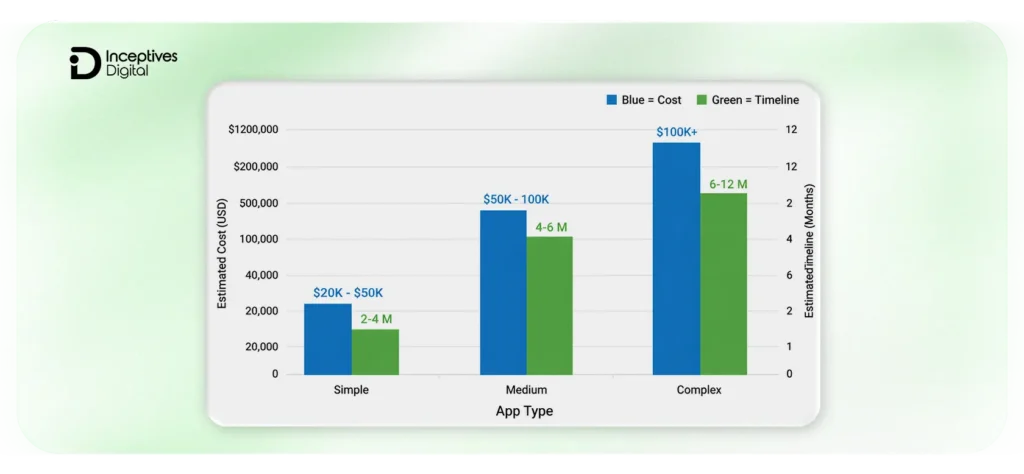
Let’s talk straightforwardly about money and time. What is the cost of a mobile app? It varies depending on the nature of the app. For instance, a basic app, such as a task manager, could be in the range of $20,000 to $50,000. On the other hand, a complicated app from a blockchain app development company might just surpass the figure of $100,000. Fees for app stores, for APIs, and for maintenance, among others, are some of the hidden costs that you would not want to be faced with. As far as the timelines are concerned, 2-4 weeks would be needed for design, 2-6 months for coding, and 1-2 months for testing.
Cost and Timeline by App Complexity
| App Type | Cost Range | Timeline |
| Simple | $20,000-$50,000 | 2-4 months |
| Medium | $50,000-$100,000 | 4-6 months |
| Complex | $100,000+ | 6-12 months |
Many businesses underestimate mobile app development costs by focusing only on initial development. In reality, post-launch expenses like updates, server costs, and performance optimization can significantly impact the total cost over time.
12. Quality Assurance and App Testing Process
Mobile app testing and quality assurance are essential to ensure a positive user experience. Testing will cover functionality, performance, design, security, and compatibility with iOS and Android devices. Ask yourself: How should I engage in the development process? Effective testing will identify bugs early, which will help avoid stress later. Ask for confirmation that effective testing happens to provide you with a solid app.
13. Post-Launch Support and Maintenance
Long-term support and maintenance ensure that your application continues to run smoothly and effectively. Operating systems are updated, bugs are introduced, and users request enhancements. When considering a mobile app development company, consider eligibility for maintenance and support once it’s released. Will they fix bugs? Will they assess how the app is performing? Will they incorporate revisions based on user feedback? Find out what they will do, and if app maintenance cost is delineated with pricing through a service-level agreement. Maintenance is key to remaining relevant; otherwise, your application might wither away into nothing.
14. Assess Industry & Domain Specialization
Domain expertise is crucial if you are building an app for a certain industry, like a video game. A mobile game development company must have expertise with popular game engines to ensure an uninterrupted and smooth gaming experience. A company with expertise in your industry understands the regulations, leaving you to focus on your users, while still building a high-performing app. Look for experience with an app in your specific industry to ensure both technology and compliance.
15. Final Decision and Common Mistakes to Avoid
At this point, use a decision matrix to evaluate portfolios, technical skills, communication, and pricing. Watch out for red flags such as ambiguous statements, lack of a contract, or slow returns on your messages. Other things to avoid when hiring mobile app developers include the cheaper price option and skipping maintenance. Find mobile app developers that seems like an equal partner for the success of your application.
Common Mistakes to Avoid While Choosing a Mobile App Development Company
Here’s what to steer clear of:
- Picking the cheapest bid, low cost often means low quality.
- Skipping quality assurance, untested apps lead to bugs and bad reviews.
- Not defining your scope, vague goals cause delays and extra costs.
- Ignoring communication issues, gaps now mean trouble later.
Avoid these, and you’re on the right track.
To Conclude: Where Can I Find the Right Mobile App Developers to Hire?
Choosing the right mobile app development company comes down to clarity, structure, and careful evaluation. When you clearly define your app goals, compare companies based on real experience, and assess them through factors like technical expertise, communication, pricing transparency, and post-launch support, the decision becomes much more objective. Instead of relying on assumptions or surface-level impressions, a structured approach helps you identify a partner who can actually deliver a stable, scalable, and user-friendly product.
If you’re currently exploring options for your project, working with reliable mobile app development services can make the entire process more organized and predictable. The right team will not only build your application but also guide you through planning, development, and long-term maintenance, so your product stays relevant after launch.
Get in touch with Inceptives Digital, inquire, get an extensive proposal, and start building something truly remarkable. The future of your app is already there waiting. Let’s turn it into a reality.
CTA SECTION START
cta title: Let’s Build a High-Performance Mobile App That Actually Grows Your Business
cta des: Partner with Inceptives Digital for mobile app development services built for speed, scalability, and real business impact.
cta button: Talk to Our Experts
CTA SECTION END
Frequently Asked Questions (FAQs)
Start by defining your app goals and required features. Then, shortlist companies based on their portfolio, technical expertise, and client reviews. Compare them using clear criteria like communication, pricing transparency, and post-launch support to make a confident decision.
The cost of hiring a mobile app development company depends on app complexity, features, and the location of the development team. A simple app may cost $20,000–$50,000, while more complex applications can exceed $100,000. Ongoing costs like maintenance, updates, and third-party integrations should also be considered.
Mobile app development timelines vary based on complexity. A basic app may take 2–4 months, while more advanced apps can take 6–12 months or longer. The timeline includes design, development, testing, and deployment stages.
Focus on experience, technical skills, communication practices, and portfolio quality. It’s also important to check if the company offers post-launch support and has experience in your industry or similar types of applications.
Both options have advantages. Local companies offer easier communication and collaboration, while offshore teams may provide cost savings. The best choice depends on your budget, project complexity, and preferred level of involvement.
Ask about their development process, technology stack, past projects, communication methods, and support after launch. Also, clarify pricing structure, timelines, and ownership of the app’s code and intellectual property.
Most professional companies offer post-launch services such as bug fixes, updates, and performance monitoring. It’s important to confirm what’s included in their maintenance plan before signing a contract.
SIDEBAR LIST START
- How to Choose the Right Mobile App Development Company?
- 1. Define Your App Development Goals and Requirements
- 2. Research Mobile App Development Companies
- 3. Shortlist & Compare App Development Companies
- How to Evaluate a Mobile App Development Company (Scorecard)
- 4. Evaluate Portfolio and Case Studies
- 5. Check Client Reviews and Testimonials
- 6. Assess Technical Expertise and Technology Stack
- 7. Communication and Collaboration Practices
- 8. App Development Methodology (Agile vs Waterfall)
- 9. Request Proposals and Compare Pricing Models
- 10. Gauge Legal Agreements and Contract Terms
- 11. Understand Budget and Development Timeline
- 12. Quality Assurance and App Testing Process
- 13. Post-Launch Support and Maintenance
- 14. Assess Industry & Domain Specialization
- 15. Final Decision and Common Mistakes to Avoid
- To Conclude: Where Can I Find the Right Mobile App Developers to Hire?
- Frequently Asked Questions (FAQs)
SIDEBAR LIST END