Why Fitness Apps Are Booming and Why Businesses Want to Build One?
As every industry has seen a significant impact due to the rapid adoption of smartphone usage, the fitness industry is no exception. Fitness mobile apps are becoming more like a guide or fitness companion for workouts, progress tracking, and customized training modules.
If we look at recent data, the fitness and health apps alone registered around 3.6 billion downloads in 2024. The revenue trajectory is estimated to be around $9.22 billion by the end of 2026, highlighting the increasing demand for smartphone-supported fitness solutions.
Seeing the increasing demand, gyms, fitness startups, and professional trainers are moving towards launching their own mobile platforms to attract and retain users. Most of the businesses prefer to collaborate with a fitness app development company for a smooth development and launch process. But before initiating the development process, a common question businesses ask is how much it costs to build a workout app.
The custom workout and training app development cost varies for projects. Feature complexity, platform selection, technology stack, and development team structure are the factors that influence the development cost.
To help you estimate the investment required for your project specifically, we will break down the cost to build a custom workout and training app in this blog. Read till the end to explore the elements that impact the workout and training app development cost, and valuable tips to estimate the right budget for your project.
How Much Does It Cost to Create a Workout App?
A Quick Overview of Fitness App Development Pricing
Before development, a clear understanding of how and where your investment will be distributed during the whole process is crucial for the app’s success. The fitness app development cost varies based on several factors such as features, complexity, and team composition. Fitness applications can be categorized into basic apps, standard fitness platforms, and advanced training applications.
A basic workout application offers essential features to users through its workout library, exercise instruction system, and basic user profile function. The standard fitness application extends this basic function by offering users structured workout programs and progress tracking capabilities, together with interactive features. The development process for advanced fitness applications requires additional resources because these apps feature multiple complex technologies that include intelligent workout systems, real-time tracking, and advanced training tools.
The given table will provide an estimation of the general cost and timeline of the various workout applications.
| App Type | Estimated Cost | Development Time |
| Basic Workout App | $20k – $40k | 2–3 months |
| Standard Fitness App | $40k – $80k | 3–6 months |
| Advanced AI Fitness App | $80k – $200k+ | 6–12 months |
Complete Cost Breakdown to Build a Custom Workout and Training App
Understanding Where Your Development Budget Goes
Breaking down the development process into core stages makes it easier to understand the custom workout and training app development cost. Each phase plays a key role in the stability and budget of a fitness platform.
Planning and Discovery Phase
It is the first phase of the project that establishes the goals while defining required features, identifying targeted users, and technical requirements. The process starts with market research and continues with feature planning and product roadmap development to ensure the application meets business objectives.
UI/UX Design
During this stage, designers create the app’s layout together with its navigation system and visual design elements. A well-designed fitness app provides users with simple navigation options together with detailed workout instructions and an interactive user experience that maintains user engagement.
App Development (Frontend and Backend)
The developers will create the real application during this stage. The frontend develops the user interface together with user interaction functions, whereas the backend controls all server operations, database functions, manages user information, and platform application requirements.
API Integrations
Fitness applications depend on third-party systems for payment processing, connecting with wearable devices and health data, and their notification services. The platform’s capabilities extend through these system integrations.
Testing and Quality Assurance
Before it is released, the application is tested for bugs, performance issues, and security flaws. Quality assurance testing confirms that the app works correctly across all platforms, operating systems, and screen sizes.
Deployment and Maintenance
The app is made available on platforms like the Google Play Store and the Apple App Store once testing is complete. Maintaining the platform’s stability and security after its initial release requires ongoing maintenance and updates in addition to performance monitoring.
Cost to Build a Custom Workout App vs Training App: Key Differences
Businesses entering the fitness application development process make the mistake of thinking workout applications function the same way as training applications. But the reality is that both applications have distinct purposes, which is why there is a difference in custom workout and training app development cost.
Workout Apps
Workout applications assist users in exercise routines and daily activities. These applications typically provide exercise libraries, workout timers, and predefined workout programs. It provides simple access to guided workouts but does not deliver comprehensive performance assessment tools.
Training Apps
Training applications are more advanced and performance-focused compared to workout applications. They support planned coaching programs, comprehensive progress tracking, and performance monitoring, which is why training app development costs more than workout apps. Common users are professional trainers, athletes, or users having longer term fitness objectives.
Key Feature Comparison
The table below illustrates the primary functional distinctions between a workout app and a training app.
| Feature | Workout App | Training App |
| Exercise library | Yes | Yes |
| Custom training plans | Limited | Advanced |
| Performance analytics | Basic | Advanced |
| AI coaching | Optional | Often required |
Key Factors That Influence Custom Workout App Development Cost
The cost to develop a customized workout application needs more than preliminary budget estimates for its complete assessment. The total budget of the project depends on several crucial factors that directly affect all aspects of development, including time required and project costs.
App Complexity and Feature Set
The number and sophistication of features play a major role in determining cost. Basic workout apps with simple exercise libraries and timers are relatively affordable, while advanced apps with personalized routines, AI-driven recommendations, real-time tracking, and progress analytics require more development resources and a higher budget.
AI-powered personalization through workout recommendations that match user progress and adaptive difficulty system implementation raises expenses while creating additional operational challenges.
Platform Choice (iOS, Android, or Cross-Platform)
Platform selection has a direct impact on the app development cost and timeline. Native development for iOS and Android requires higher expenses than cross-platform app development, which enables time savings and budget reductions while maintaining system capabilities.
UI/UX Design Complexity
The user interface plays a crucial role in user engagement, so it has to be designed strategically accordingly. The development process requires additional resources to create apps that combine user-friendly navigation with interactive animations and tailored dashboard features.
Backend Infrastructure and Cloud Services
Backend systems manage user information, exercise programs, data analysis, and immediate data updates. Applications that combine cloud storage with expandable servers and protected database systems need greater financial resources.
Third-Party Integrations
Integration of external tools enhances overall functionality, but increases the cost as well. Common integrations are:
- Wearables (Fitbit, Apple Watch, Garmin)
- Payment gateways (Stripe, PayPal)
- Video streaming services for workout tutorials
Development Team Location
Hourly rates of your team depend on their location. North American and Western European developers typically have higher rates than their Asian and Eastern European counterparts. Effective budget management requires organizations to find the optimal combination of affordable services and skilled personnel.
Feature-Based Workout App Development Cost Breakdown
A feature breakdown helps estimate a realistic workout app development cost. Every feature you add contributes to the overall development budget. Here are the must-have features for a successful workout application.
1. User Registration and Profile Management
Provides essential user onboarding features such as account creation, profile customizations, and secure logins. It creates a foundation for personalized workout experiences.
2. Workout Library and Video Tutorials
The exercise library provides users with proper workout guidance through its collection of instructional videos. The exercise quality and quantity, together with the video integration, determine the project costs.
3. Personalized Training Plans
The development of personalized workout programs needs backend systems together with algorithm systems because of user-specific needs and their current fitness level and workout selection.
4. Progress Tracking and Analytics
The app gains additional benefits through user performance tracking and calories burned monitoring, and workout history documentation, which requires a strong backend system to handle data storage and processing tasks.
5. Push Notifications and Reminders
Notifications maintain user engagement by sending reminders about upcoming workouts, track records, and newly added training programs. The system contains basic elements that yet serve as fundamental components for maintaining user engagement.
6. Wearable Device Integration
Users can synchronize their fitness data through the app when they connect it to their Fitbit and Apple Watch fitness devices. The complexity of development work increases, and the cost of the project rises because of this system integration.
7. In-App Payments and Subscriptions
Subscriptions or one-off payments require the provision of secure payment gateways, and the platform is to be compliant with the related regulations, all of which would escalate the budget.
Estimated Feature Development Costs
| Features | Estimated Cost |
| User Profiles | $2k – $5k |
| Workout Library | $5k – $10k |
| Training Programs | $6k – $12k |
| Progress Tracking | $5k – $9k |
| Wearable Integration | $8k – $15k |
The breakdown presentation shows how different components affect the workout app development costs, which helps budget planning for developing a feature-rich platform.
Custom Training App Development Cost Based on Advanced Features
Because training apps have more sophisticated features like individualized coaching, performance tracking, and user interaction, the cost of developing a custom training app is typically higher than that of a workout app. The training app development cost is directly impacted by the need for more robust backend systems, integration, and scalable architecture to handle these sophisticated features.
The most popular advanced features found in high-performance training programs are listed below.
AI-Powered Workout Recommendations
- Personalized workout suggestions
- AI-based performance analysis
- Adaptive training programs
Real-Time Coaching and Video Streaming
- Live workout sessions
- On-demand training videos
- High-quality video streaming support
Social Community and Leaderboards
- User communities and discussion groups
- Global and friend-based leaderboards
- Social sharing features
Gamification and Challenges
- Achievement badges and rewards
- AR/VR in Fitness challenges and competitions
- Progress milestones
Integration With Fitness Wearables
- Apple Watch integration
- Fitbit connectivity
- Real-time health data synchronization
Nutrition and Diet Planning Tools
- Meal planning tools
- Calorie and nutrient tracking
- Diet recommendation systems
UI/UX Design Cost for a Custom Fitness Application
UI/UX design is one of the main factors that determines the cost of custom fitness app development. A good user experience allows users to easily navigate and stay engaged with the training routines. As fitness apps heavily depend on the user experience, spending on an intuitive and visually appealing design attracts and retains users.
Intuitive Fitness App Interfaces
Simple and clear navigation in a fitness app ensures that the user can easily access workout routines, training plans, and progress dashboards without any confusion.
Personalization and Accessibility Design
Modern fitness platforms offer users personalized dashboards that adapt to layouts and provide accessibility features to ensure smooth app operation across all user fitness levels and device preferences.
Animation and Micro-Interactions
Subtle animations, together with progress indicators and micro-interactions, create a better user experience because they make workouts more interactive and visually appealing. The design elements of the system improve user experience, but they also require extra work for developers.
Impact of Team Structure on the Custom Workout and Training App Development Cost
As we discussed earlier, the custom fitness app development process involves distinct stages that require a multidisciplinary team to handle the project from planning to launch. Each skillset has different salary brackets, and that’s why the team structure has a direct impact on the custom workout and training app development cost. For example, an experienced developer would cost more than a less experienced developer. So the development cost for your project depends on the type of team you hire.
Key Roles in the Development Team
- Project Manager – Manages all aspects of project planning and establishes timelines while coordinating between different teams.
- UI/UX Designer – Creates the application interface through layout design and user experience development work.
- Frontend Developer – Builds all visible parts of the application that users will interact with.
- Backend Developer – Creates the server-side components that include both APIs and database management systems.
- QA Tester – Conducts application testing to find defects and verify that the application functions properly on all supported devices.
- DevOps Engineer – Handles all tasks related to system deployment and cloud infrastructure management, together with continuous integration processes.
Average Hourly Rates for Key Roles
| Role | Hourly Rate |
| Developer | $40 – $120 |
| Designer | $30 – $100 |
| Project Manager | $50 – $150 |
Cost Comparison: In-House vs Outsourced Fitness App Development
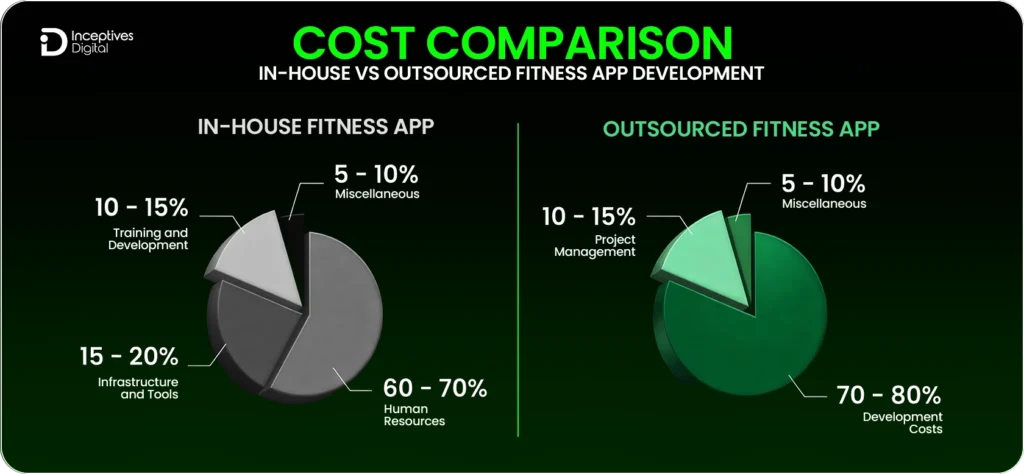
During a custom workout and training app development cost estimation, an important decision that businesses have to make is deciding between an in-house and outsourced development team. This is a crucial decision that will direct the whole development process, speed, cost, and scalability of the project.
| Factor | In-House Development | Outsourced Development |
| Budget | Higher long-term cost due to salaries, infrastructure, and benefits | More cost-efficient with project-based pricing |
| Expertise | May require time to hire and train skilled professionals | Access to experienced developers with relevant project experience |
| Time to Market | Slower due to recruitment and team setup | Faster development with an established team |
| Scalability | Scaling requires additional hiring | Easy to scale resources based on project needs |
Monetization Models That Help Recover Workout App and Training App Development Cost
A fitness app needs clear app monetization strategies after its launch because these plans must generate enough revenue to recover development costs and create ongoing financial success. Successful fitness platforms generate their income through various revenue streams instead of using one business model for their operations.
Subscription Plans
Fitness applications use subscription services as their primary revenue generation method. Users pay a monthly or yearly fee to access premium workout plans, guided training programs, and advanced tracking features.
Freemium Model
In this model, the app provides free basic features to users for user acquisition and charges users for access to advanced features, such as personalized training plans, premium workouts, and analytics.
In-App Purchases
Fitness applications provide users with an option to purchase particular application content and application features. The available options include dedicated exercise programs, individual training sessions, and nutritional programs.
Paid Training Programs
Professional trainers and fitness coaches can sell structured training courses and premium workout challenges through the platform, which provides them with new opportunities to generate revenue.
Ads and Sponsorships
Fitness brands and nutrition companies, together with sports equipment manufacturers, all use fitness applications to promote their products through advertising. The platform generates income through sponsored content and targeted advertisements that users can access without paying fees.
Real-World Examples of Popular Fitness Apps and Their Estimated Development Costs
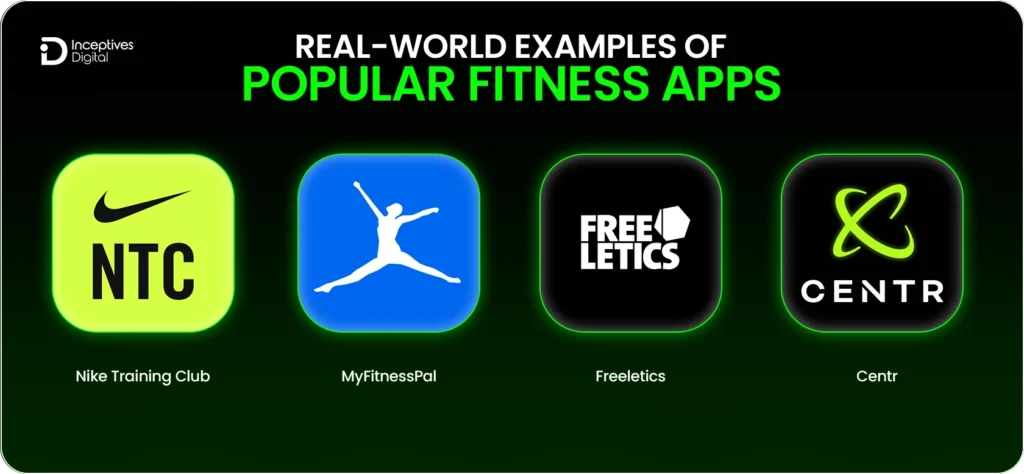
Looking at successful fitness apps in the market can help businesses understand the potential investment required to build a competitive platform. The examples below highlight popular fitness applications, their key features, and estimated development cost ranges based on app complexity and functionality.
Nike Training Club
- Key Features
- Trainer-led workout programs
- On-demand workout video library
- Personalized training recommendations
- Progress tracking and workout scheduling
- Equipment-based and equipment-free workouts
- Estimated Development Cost: $35,000 – $100,000
- Estimated Development Time: 4–7 months
MyFitnessPal
- Key Features
- Calorie and nutrition tracking
- Food database and diet logging
- Fitness goal tracking
- Integration with fitness trackers
- Progress analytics dashboard
- Estimated Development Cost: $30,000 – $90,000
- Estimated Development Time: 3–6 months
Freeletics
- Key Features
- AI-powered workout recommendations
- Personalized training plans
- Gamified workout challenges
- Performance tracking and analytics
- Community engagement features
- Estimated Development Cost: $30,000 – $95,000
- Estimated Development Time: 3–6 months
Centr
- Key Features
- Guided workout programs
- Nutrition and meal planning
- Mindfulness and wellness content
- Video-based training sessions
- Subscription-based premium content
- Estimated Development Cost: $40,000 – $120,000
- Estimated Development Time: 4–7 months
These examples show that the development cost of a fitness application can vary widely depending on features, integrations, and platform complexity. Apps that include AI personalization, video libraries, and wearable integrations generally require a higher investment.
Hidden Costs in Custom Workout and Training App Development You Should Know
A common mistake many businesses make is focusing only on development expenses when estimating overall development costs. In reality, one has to consider maintenance, cloud hosting, security compliance, and marketing launch costs while estimating the cost of building a custom workout app. Early planning of these costs saves you from unexpected expenses and mitigates risks of security, compliance, and performance issues.
App Maintenance
Maintenance is needed on a regular basis to debug, keep track of performance, and maintain the application operating smoothly on various devices and operating systems.
Cloud Hosting
Fitness applications store user information together with exercise records and multimedia content on cloud storage. The costs of operating a business in database administration and hosting services will create ongoing financial obligations for the company.
Updates and Feature Upgrades
User expectations evolve quickly, so applications require ongoing updates to deliver new features and enhance their performance while maintaining compatibility with current mobile operating systems.
Marketing and User Acquisition
An application launch marks the starting point for completing the development process. Businesses use digital marketing and app store optimization together with promotional campaigns to create user attraction and user retention.
Security and Compliance
Organizations that handle user data, health information, and process payments need to establish strong security measures that comply with HIPAA, GDPR, and PCI DSS standards. Meeting these regulations requires organizations to invest in encrypted data storage solutions, secure authentication, and continuous security monitoring, which will increase the operational cost.
Estimated Hidden Costs in Custom Workout and Training App Development
| Hidden Cost | Estimated Cost Range |
| App Maintenance | $5,000 – $20,000 per year |
| Cloud Hosting | $1,000 – $10,000 per year |
| Updates and Feature Upgrades | $3,000 – $15,000 per update cycle |
| Marketing and User Acquisition | $5,000 – $50,000+ depending on campaign |
| Security and Compliance | $2,000 – $10,000 per year |
How to Reduce the Cost to Build a Custom Workout and Training App
Building a fitness platform does not always require a massive upfront investment. Businesses can decrease custom workout and training app development costs through proper planning and development methods while maintaining a high-quality user experience.
Start with an MVP
Start with a Minimum Viable Product (MVP) that contains only essential components as your first step. Businesses can use this approach to test their app concept, collect user opinions, and make platform enhancements before they spend money on developing complex features.
Use Cross-Platform Development
Cross-platform frameworks enable developers to create mobile applications that function on both Android and iOS platforms through a shared codebase. This method improves development efficiency while decreasing the development cost and timeline.
Focus on Core Features First
When it comes to app design and development cost aspect, user profiles and logs, workout libraries, and progress tracking should be considered must-haves. Prioritizing these features helps launch the app faster instead of the complex ones, saving both time and cost.
Outsource Development
For startups and businesses with limited technical resources, it becomes more cost-effective to work with an experienced mobile app development company than to create an internal development team.
Reuse APIs and SDKs
The development process progresses at a faster rate when developers use existing APIs and software development kits to implement essential features such as payments, authentication, and notification systems.
Conclusion: Is Building a Custom Workout and Training App Worth the Investment?
Building a fitness app requires developers to create proper plans while selecting appropriate features and choosing suitable technology solutions. The costs for a project vary according to its complexity, chosen platform, design requirements, integration needs, and team organizational structure. A proper understanding of these elements enables businesses to create effective budget plans and development strategies.
If you are considering launching a fitness platform, taking guidance from experienced professionals can simplify the entire process from planning to deployment. Collaborate with a company experienced in fitness app development services, who will assist you in assessing feature requirements, selecting appropriate technologies, and developing scalable solutions.
CTA SECTION START
cta title: Planning to build a custom workout or training app?
cta des: Partner with Inceptives Digital, a trusted mobile app development company, to design, develop, and launch scalable fitness applications.
cta button: Get Started Today
CTA SECTION END
FAQs About Custom Workout and Training App Development Cost
The cost varies based on features, platform choice, design complexity, and team location. Basic apps typically range from $20k–$40k, while advanced AI-powered training apps can exceed $200k.
The main factors are UI/UX design, backend infrastructure, integrations, level of complexity, and the platform you select. For example, a cross-platform approach costs less than going for iOS and Android app development natively.
Development timelines depend on app complexity. Basic workout apps can take 2–3 months, standard fitness apps 3–6 months, and advanced training platforms 6–12 months.
Outsourcing can be more cost-effective and faster due to experienced teams and established workflows, while in-house development offers more control but higher long-term costs.
Start with an MVP, focus on core features, use cross-platform development, outsource to experienced teams, and leverage existing APIs and SDKs to save time and budget.
SIDEBAR LIST START
- How Much Does it Cost to Build a Custom Workout and Training App?
- Why Fitness Apps Are Booming and Why Businesses Want to Build One?
- How Much Does It Cost to Create a Workout App?
- Complete Cost Breakdown to Build a Custom Workout and Training App
- Cost to Build a Custom Workout App vs Training App: Key Differences
- Key Factors That Influence Custom Workout App Development Cost
- Feature-Based Workout App Development Cost Breakdown
- Custom Training App Development Cost Based on Advanced Features
- Impact of Team Structure on the Custom Workout and Training App Development Cost
- Cost Comparison: In-House vs Outsourced Fitness App Development
- Monetization Models That Help Recover Workout App and Training App Development Cost
- Real-World Examples of Popular Fitness Apps and Their Estimated Development Costs
- Hidden Costs in Custom Workout and Training App Development You Should Know
- How to Reduce the Cost to Build a Custom Workout and Training App
- Conclusion: Is Building a Custom Workout and Training App Worth the Investment?
- FAQs About Custom Workout and Training App Development Cost
SIDEBAR LIST END