Why Blockchain in Software Development Is Gaining Real Traction?
One of the most difficult tasks and critical constraints for success is gaining user trust for a software or digital solution. Users are now more concerned about their data, finances, and other kinds of digital assets rather than just functionality, as the risks of fraud and data breaches are higher than ever. This shift in user behaviour has pushed businesses towards blockchain software development that can handle sensitive data and complex transactions more securely.
Due to this momentum shift, the blockchain market is valued at $32.99 billion in 2025, which is projected to touch the whopping $393.45 billion mark by 2030. This market surge is not just for the sake of using unique technology or experimentation. Instead, it shows the demand for transparency, data integrity, and providing a trustworthy experience to users. Unlike traditional software, blockchain uses a decentralized model instead of a centralized authority.
But the integration of blockchain in software development required deep expertise to solve actual problems. That is why most businesses prefer to collaborate with an experienced blockchain app development company. They can really turn complex ideas into functioning and secure blockchain solutions.
In this guide, we’ll break down how blockchain is changing software development at a foundational level, where it delivers real value, and what you need to know before adopting it.
What Is Blockchain in Software Development? (Simple but Practical Explanation)
At its core, blockchain in custom software development is a way of building applications on a distributed ledger instead of a central database. Instead of storing data in one place, information is shared across a network of computers, and every update is verified by the network itself.
Blockchain operates as both a storage solution and a development platform, which establishes trust, security, and transparency through its fundamental system design. Developers create systems that enforce rules and process transactions through code while enabling shared verification of system operations.
How Blockchain Fits into Modern Software Engineering
In traditional software engineering applications, centralized architectural systems are used. It operates with a backend server that manages logic and a database that stores data, while users maintain their trust in the system’s performance.
With blockchain software development, that model shifts:
- Backend logic can live on the blockchain through smart contracts
- Data is shared and synchronized across multiple nodes
- Trust is established through consensus instead of a central authority
Blockchain technology proves its worth in situations where multiple parties require interaction while maintaining their partial trust deficits in one another. This demonstration applies to financial platforms, supply chains, and identity systems.
Key Components Developers Work With
It is practical to delve into an understanding of Real-World Applications for Blockchain. Let’s start with an understanding of the fundamentals:
1. Nodes and Peer-to-Peer Networks
Blockchain operates through a system of nodes, which consist of computers that establish direct communication links between themselves. The system operates without a main server. The network nodes store complete ledger copies and assist in the process of validating new transactions.
2. Consensus Mechanisms (PoW, PoS)
As no overarching authority exists, the network is required to come to an agreement regarding what is valid. It is all up to the contentious mechanism:
- Proof of Work (PoW): Requires nodes to solve difficult mathematical problems for transaction validation.
- Proof of Stake (PoS): Determines validation through network stake ownership by participants.
These mechanisms ensure every participant’s agreement on the system state.
3. Cryptographic Hashing
The blockchain secures every data entry through cryptographic hashing. It generates an unchangeable, distinct identification code for every block. The hash detects any attempt to change data because it is modified immediately when any data is altered.
4. Smart Contracts
Smart contracts function as blockchain-based executable code that are capable of operating without human intervention. They initiates its operations when users fulfill specific required conditions. Developers use them to handle:
- Payments
- Agreements
- Automated workflows
Logics are executed through code instead of depending on third parties for operational control.
Understanding these building blocks makes it easier to see why blockchain in software development breaks the limits of a minor software upgrade. The entire process of application development receives changes that affect both its design standards, its deployment methods, and its trust mechanisms.
Quick Breakdown: Blockchain Architecture in Software Systems
How everything fits together can be put into context better by viewing the blockchain as a layered architecture:
Network Layer
It enables nodes to establish connections through its peer-to-peer network. They operate through their design, which enables communication, data distribution, and transaction sharing among users.
Protocol Layer
The protocol layer defines the rules of the blockchain:
- Consensus mechanisms
- Transaction validation
- Block creation
It ensures the entire network operates consistently and securely.
Application Layer (dApps)
This layer enables user interactions with the system. Developers create decentralized applications (dApps) that they build on blockchain technology by using smart contracts and user interfaces to develop practical applications.
Blockchain Software Development vs Traditional Software Development
To really put things into perspective for blockchain’s impact on software development, one could easily compare blockchain to the existing systems used by most teams. Traditional software uses centralized architecture for its development process, but blockchain software development replaces this approach with a distributed system that depends on trust relationships. This transformation affects every aspect of the system because it alters both data storage methods and application security procedures and maintenance practices.
Key Differences Developers Should Know
| Aspect | Traditional Software | Blockchain Software Development |
| Architecture | Centralized | Distributed / decentralized |
| Data Storage | Database (SQL/NoSQL) | Distributed ledger |
| Trust Model | Third-party validation | Trustless via consensus |
| Data Integrity | Editable | Immutable |
| Failure Risk | Single point of failure | Highly resilient |
The comparison shows that traditional systems rely on one authority to control everything. On the other hand, blockchain systems spread control across the entire network. This difference is the reason blockchain-based applications provide better security features, transparency, and protection against unauthorized access.
Why Blockchain Is Transforming Software Development (Core Drivers)
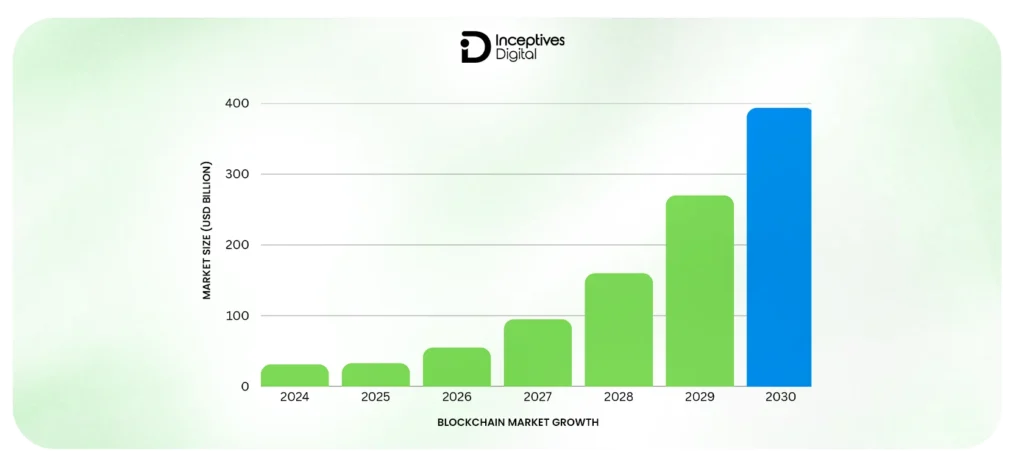
Adoption of blockchain technology in software development is not due to the hype. It is due to realistic technical and business requirements that cannot be achieved by traditional systems. The size of products is getting bigger and bigger. This means digital products are becoming really complicated and have a lot of data. Because of this, it is hard for systems that are controlled from one place to handle them. So companies are looking for a way to do things. They want a system that’s safe, easy to see what is going on, and gives them more control over what happens.
Here are the reasons why blockchain is being used extensively in software development:
1. Demand for Secure and Tamper-Proof Systems
Modern applications manage sensitive data, including financial transactions and personal identity records. Traditional databases offer security measures, but they create a single point of vulnerability that organizations must protect. Blockchain technology enables data protection through its cryptographic validation and distributed storage, which creates resistance against unauthorized access and data manipulation.
2. Rise of Web3 Development and Decentralized Apps (dApps)
Web3 development has experienced significant growth, making blockchain technology a standard practice in software engineering. Decentralized applications (dApps) operate on peer-to-peer networks, giving users better control over their data and interactions than traditional applications that are operated by single companies. This new approach to software development creates different methods for building software, deploying it, and generating revenue.
3. Growing Need for Enterprise Blockchain Solutions
Enterprises are adopting blockchain software development to enhance their ability to track processes that operate within organizations and external partners. Blockchain technology enables stakeholders to access a common source of information, which they can use for tracking supply chains and conducting financial reconciliation without needing complex reconciliation procedures.
4. Increased Focus on Data Ownership and Privacy
Users and regulators are putting more pressure on companies to give individuals control over their data. Users can control their data access through blockchain technology that provides decentralized identity systems and encrypted data structures to eliminate the need for centralized platforms.
5. Reduction of Intermediaries → Cost Efficiency
The most useful aspect of blockchain technology for software development is its capability to eliminate all intermediary parties from the development process. Businesses use smart contracts, combined with an automated validation process, enable businesses to decrease operational costs while achieving faster transaction times and reducing the need for external service providers.
These drivers demonstrate that blockchain technology is not just an experimental system anymore. It now serves as a fundamental component in software development that provides greater security, transparency, and operational efficiency.
Key Ways Blockchain Is Changing Software Development
Blockchain technology functions as more than a backend upgrade for software development. It changes every aspect of the mobile app development process by transforming application structure, logic execution, and user interactions. Blockchain establishes trust and data integrity in its architectural design instead of depending on a centralized authority.
1. Decentralized Application (dApp) Development Is Replacing Traditional Apps
Decentralized applications, or dApps, are software programs that run on a blockchain network instead of a single centralized server. It operates without any centralized point, mitigating a single point of control or failure.
In this model:
- Backend logic operates through distributed processing across several nodes.
- Data accuracy is checked through network verification instead of using a central database.
- Maintains application functionality when any single network component experiences an outage.
This transition is changing the mindsets of developers in terms of scalability, uptime, and control around modern software systems.
2. Smart Contracts Are Redefining Business Logic
Smart contracts function as self-executing programs on the blockchain that execute automatically when their predetermined conditions are fulfilled. They operate without requiring human operators or outside entities to confirm their operations.
They are widely used in:
- Payments and automated transactions
- Legal agreements and contract enforcement
- Insurance claim processing
The smart contracts execute their logic through direct on-chain execution that eliminates the need for external approval systems, thus achieving faster execution and enhanced trust among parties.
3. Security-First Development Approach
Security is the essential foundation for blockchain software development. Development teams use cryptographic techniques, making data nearly impossible to change without being detected.
Key aspects include:
- Built-in cryptographic security at the protocol level
- Reduced attack surface compared to centralized systems
- Strict importance of smart contract audits to prevent vulnerabilities
Security testing becomes essential during development because blockchain applications process financial and sensitive data, which means any coding mistake will result in major security threats.
4. Transparent and Auditable Software Systems
The core strength of blockchain technology is its ability to provide complete transparency for all operations. Blockchain stores every transaction as a permanent record with time stamps and verification details.
This enables:
- Fully traceable system activity
- Easier compliance with regulatory standards
- Real-time auditing without relying on third-party logs
For industries like finance, health, and logistics, this kind of transparency would lower disputes significantly and foster accountability.
5. Tokenization and New Digital Business Models
Tokenization is the concept introduced by blockchain, so that real-world or digitized assets are turned into tokens on the blockchain network.
This enables:
- Creation of digital assets like NFTs and utility tokens
- New monetization models inside applications
- User ownership of in-app assets and economies
Largely, the changes show that blockchain in software development is not just making the existing systems better; it is redefining the concept of designing, securing, and monetization strategies.
Blockchain Development Tech Stack (What Developers Actually Use)
Building blockchain-based applications requires different technology stacks than developers use for traditional software development. Blockchain software developers need to manage protocols, smart contracts, and decentralized infrastructure instead of working with frontend frameworks and backend servers.
To make it easier to understand, below are the core technologies that power a blockchain development stack.
Core Technologies in Blockchain Software Development
1. Blockchain Platforms
Applications use these foundations as the essential building blocks for development and deployment. They provide distinct functionalities depending on the specific application use cases.
- Ethereum → Widely used for smart contracts and dApps
- Hyperledger → Preferred for enterprise blockchain solutions and private networks
- Solana → Known for high-speed transactions and scalability
2. Programming Languages
Blockchain development requires both dedicated programming languages for smart contract development and general programming languages for complete system integration.
- Solidity → The most popular language for writing smart contracts on Ethereum
- Rust → Used in high-performance blockchains like Solana
- Java → Common in enterprise blockchain environments, especially with frameworks like Hyperledger
3. Tools and Frameworks
These tools allow developers to interact with blockchain networks, test smart contracts, and create user-facing applications.
- Web3.js / Ethers.js → Libraries for connecting frontend applications to the blockchain
- Hardhat / Truffle → Development frameworks for building, testing, and deploying smart contracts
How This Stack Fits Together
In a typical blockchain software development workflow:
- Developers write smart contracts using Solidity or Rust
- Deploy them on platforms like Ethereum or Solana
- Use tools like Hardhat to test and manage deployments
- Connect the blockchain backend to a frontend using Web3.js or Ethers.js
This stack demonstrates an essential transformation. In blockchain software development, developers create applications that establish trustworthy systems that depend on their integrated infrastructure, logical framework, and data verification processes.
Blockchain Development Stack Overview
| Layer | Tools & Technologies |
| Blockchain Platforms | Ethereum, Hyperledger, Solana |
| Smart Contract Languages | Solidity, Rust |
| Frameworks | Hardhat, Truffle |
| APIs & Libraries | Web3.js, Ethers.js |
| Storage | IPFS, Filecoin |
Real-World Use Cases of Blockchain in Software Development
Looking at how blockchain is being implemented across different industries helps us understand the real value of blockchain. Organizations are using blockchain technology to address trust issues, transparency needs, and data security requirements in ways that standard systems cannot provide.
These use cases demonstrate practical applications that companies already implement.
1. Financial Applications and DeFi Platforms
One of the most developed blockchain use cases pertains to fintech app development with specific amplification of decentralized finance (DeFi) platforms. These eliminate the intermediary or banks and replace them with direct peer-to-peer transactions.
Common applications include:
- Peer-to-peer lending platforms
- Decentralized exchanges (DEXs)
- Cross-border payment systems
Implementation of smart contracts enables automatic execution of transactions, leading to reduced operational delays, decreased transaction expenses, and eliminating the need for intermediary services.
2. Blockchain in Supply Chain and Logistics Software
Blockchain technology is shifting the paradigm of tracing and managing supply chains by providing a transparent and irrevocable document on items as they move.
Key benefits include:
- Product traceability from origin to delivery
- Fraud prevention by verifying authenticity
- Real-time tracking across multiple stakeholders
A must-have in industries such as Food, Pharmaceuticals, and Luxury goods, where originality and compliance are of primary interest.
3. Blockchain in Healthcare Software Systems
Healthcare systems handle extremely sensitive information, which requires them to prioritize security protection and privacy measures. Blockchain in healthcare app development solves these problems by providing secure methods for controlled data sharing.
Use cases include:
- Secure patient record management
- Controlled data access between providers
- Improved interoperability across healthcare systems
This will foster greater interoperability between healthcare providers in a highly structured data-sharing environment that ensures strict data privacy.
4. Blockchain in Identity and Access Management
Blockchain technology brings important advantages to the field of digital identity management. Users can manage their personal information through a self-sovereign identity, which blockchain technology provides as an alternative to centralized identity systems.
Applications include:
- Blockchain-based authentication systems
- Secure login without passwords
- Reduced risk of identity theft
This approach allows users more control and enhances security across software applications.
5. Blockchain in Gaming, NFTs, and Digital Ownership
Blockchain is also reconfiguring the concept of ownership in the digital world, especially in mobile game development and virtual economies.
Key innovations include:
- In-game assets represented as tokens or NFTs
- Players owning and trading digital items
- Creation of player-driven economies
This shifts control from developers to users, allowing proper ownership of digital assets and thereby venturing into new monetizing models.
These use cases demonstrate that blockchain technology in software development has progressed from theoretical research to real-world applications, delivering significant value. Blockchain enables developers to create digital products through entirely new methods that go beyond traditional system improvements.
Benefits of Blockchain in Software Development
Blockchain software development has proven to be useful in core business challenges like trust, data protection, and maintaining efficient operations. Here are some of the main benefits of blockchain technology in software development.
1. Strong Data Security Through Cryptography
Blockchain technology employs sophisticated cryptographic methods to protect data throughout all its security levels. It creates encrypted links between all transactions, making it nearly impossible to modify or break into the stored data. These unique characteristics of blockchain technology make it highly suitable for systems that manage financial records, personal identification information, and confidential corporate data.
2. Transparency and Traceability
Every transaction recorded on a blockchain system receives a time stamp, which can only be accessed by authorized users. This creates a clear and traceable history of all activities within the system. Sectors like finance and supply chain industries need this degree of transparency because it helps them maintain accountability while reducing conflicts and establishing trust between users.
3. Reduced Operational Costs (Fewer Intermediaries)
One of the most practical advantages of blockchain in software development is its ability to eliminate the need for intermediaries. Using smart contracts together with automated validation systems, it enables businesses to eliminate their dependence on third-party services, resulting in lower transaction costs, faster processing times, and decreased operational expenses.
4. Improved Trust Across Stakeholders
Blockchain establishes a common framework of verified information that all network members can use as a reliable reference point. Stakeholders can verify data through consensus because its permanent nature prevents unauthorized changes to the information. It fosters better cooperation between parties that do not fully trust each other.
5. Decentralized Control
Blockchain technology establishes control through network distribution instead of relying on centralized control like traditional systems. It achieves higher resilience and reliability because it prevents system failures, censorship, and unauthorized access.
Challenges in Blockchain Software Development (What Most Blogs Skip)
While blockchain brings clear advantages, it’s not without trade-offs. Many businesses jump in expecting immediate benefits, only to realize that blockchain software development comes with its own set of technical, operational, and regulatory challenges. Understanding these early can save time, cost, and unnecessary complexity.
Scalability and Performance Limitations
One of the biggest challenges with blockchain systems is scalability. Unlike traditional databases that can process thousands of transactions per second, many blockchain networks still struggle with throughput.
Common issues include:
- Slower transaction processing speeds
- Network congestion during high demand
- Increased transaction fees on public blockchains
This makes blockchain less suitable for applications that require real-time, high-volume processing unless additional scaling solutions are implemented.
Complex Development Process
The blockchain development process is significantly more complex than traditional software development. It requires a different mindset along with specialized technical skills.
Key challenges include:
- Learning curve for languages like Solidity and tools in the Web3 ecosystem
- Limited availability of experienced blockchain developers
- Less mature tooling compared to conventional development frameworks
This complexity can increase development timelines and make hiring the right talent more difficult.
Regulatory and Compliance Challenges
Regulation around blockchain is still evolving, especially in markets like the U.S. This creates uncertainty for businesses looking to build and scale blockchain-based applications.
Major concerns include:
- Lack of clear legal frameworks for blockchain use cases
- Compliance requirements vary by region and industry
- Data privacy challenges, especially with immutable records
Companies need to carefully assess legal implications before integrating blockchain into their systems.
High Cost of Development and Maintenance
Blockchain projects often require higher upfront investment compared to traditional applications.
Cost factors include:
- Smart contract development and security audits
- Infrastructure and network usage costs
- Ongoing app maintenance cost and updates (which can be complex due to immutability)
Even small errors in smart contracts can be costly, making thorough testing and auditing essential.
These challenges don’t mean blockchain should be avoided. Instead, they highlight the importance of using it strategically. When applied to the right use cases, the benefits can outweigh the limitations, but going in without a clear understanding can lead to unnecessary complications.
When to Use Blockchain in Software Development (Decision Framework)
Blockchain isn’t a default choice for every application. In some cases, it delivers real value. In others, it only adds complexity. The difference comes down to the problem you’re trying to solve.
Use Blockchain When:
- Multiple parties need shared access
When different stakeholders need to work with the same data without relying on a central authority, blockchain creates a shared, reliable source of truth. - Trust is a major concern
If users or parties don’t fully trust each other, blockchain replaces that uncertainty with consensus-driven validation instead of third-party control. - Transparency is required
When visibility and traceability matter, blockchain ensures every transaction is recorded, verifiable, and cannot be altered.
Avoid Blockchain When:
- You need high-speed transactions
Blockchain networks are slower by design. For real-time, high-volume processing, traditional systems are more efficient. - A centralized system already works well
If a single authority can manage your system effectively, adding blockchain may not provide meaningful benefits. - The budget is limited
Blockchain software development involves higher upfront costs, from specialized development to security audits, making it less ideal for simpler applications.
Quick Takeaway
Blockchain makes sense when trust, transparency, and shared control are essential. If those factors aren’t critical, a traditional approach will usually be faster, simpler, and more cost-effective.
How Blockchain Is Changing the Software Development Lifecycle
Blockchain doesn’t just change what you build, it changes how you build it. From planning to maintenance, every stage of the software development lifecycle requires a different approach and understanding of various types of blockchain when you’re working with decentralized systems.
1. Planning (Identifying Decentralized Use Cases)
Not every idea needs blockchain. The first step is validating whether decentralization actually adds value, especially in scenarios involving multiple stakeholders, trust gaps, or transparency requirements.
2. Development (Smart Contracts + Frontend Integration)
Development goes beyond traditional backend logic. Core functionality is written as smart contracts, while frontend applications interact with the blockchain using Web3 libraries. This requires careful design since smart contracts are harder to modify later.
3. Testing (Security Audits and Vulnerability Checks)
Testing in blockchain software development is far more intensive. Since smart contracts are immutable once deployed, even small bugs can lead to major risks. This makes code reviews, automated testing, and third-party security audits essential.
4. Deployment (Testnet → Mainnet)
Instead of directly publishing on App Stores, blockchain applications are first tested on test networks (testnets). Once validated, they are deployed to the main network (mainnet), where transactions become permanent and publicly verifiable.
5. Maintenance (Limited Updates Due to Immutability)
Unlike traditional applications, updating blockchain-based systems is not straightforward. Once deployed, smart contracts cannot be easily changed, which means developers must plan upgrades carefully or use proxy patterns to enable flexibility.
Key Insight
Blockchain systems demand a much higher level of security, precision, and reliability throughout the development lifecycle. Mistakes are harder to fix, which is why planning and testing play a far more critical role compared to traditional software development.
Cost of Blockchain Software Development
The cost of building a blockchain-based application can vary significantly depending on complexity, features, and the level of security required. Compared to traditional development, blockchain software development often involves higher upfront investment due to specialized skills, smart contract development, and security audits.
Here’s a realistic breakdown of blockchain app development cost:
Blockchain App Development Costs Estimated
| Project Type | Estimated Cost (USD) |
| Basic dApp | $30,000 – $80,000 |
| Mid-Level Platform | $80,000 – $200,000 |
| Enterprise Blockchain Solutions | $200,000 – $500,000+ |
What Impacts the Cost?
- Complexity of the application (number of features, integrations)
- Smart contract development and auditing
- Choice of blockchain platform (public vs private)
- UI/UX and frontend development
- Security requirements and compliance needs
Quick Insight
Blockchain in software development is an investment in long-term security and trust. While the upfront cost may be higher, it often reduces operational costs over time by eliminating intermediaries and automating processes.
Future Trends in Blockchain Software Development
Blockchain is steadily shifting from early-stage experimentation to real-world implementation across industries. Instead of being treated as a separate or niche technology, it’s now being built directly into modern software systems where scalability, usability, and performance actually matter. This shift is shaping how blockchain software development evolves, especially as it starts integrating more closely with mainstream tools, platforms, and enterprise needs.
1. Web3 Ecosystem Expansion
Web3 is pushing the internet toward decentralization, where users have more control over their data and digital identity. This shift is also improving how decentralized applications (dApps) are designed, making them more user-friendly and closer to traditional apps in experience.
2. Integration with AI and NLP
Blockchain is increasingly being combined with AI and Natural Language Processing (NLP). AI helps analyze blockchain data for insights and automation, while blockchain ensures data integrity and transparency. Together, they improve areas like fraud detection and smart contract optimization.
3. Blockchain-as-a-Service (BaaS) Growth
BaaS platforms are simplifying blockchain adoption by offering ready-made infrastructure. Instead of building from scratch, businesses can use cloud-based blockchain services and focus on application development.
4. Layer 2 Scaling Solutions
Layer 2 solutions improve blockchain performance by handling transactions off-chain while maintaining security. This reduces congestion, lowers costs, and makes blockchain applications more scalable for real-world use.
5. Enterprise Adoption Is Increasing
More enterprises are moving from testing to full-scale implementation of blockchain solutions. The focus is on improving transparency, reducing inefficiencies, and streamlining multi-party processes.
Conclusion: Is Blockchain the Future of Software Development?
Blockchain is no longer just an emerging concept in software development. It’s becoming a practical approach for building systems that prioritize trust, transparency, and security. From decentralized applications and smart contracts to enterprise use cases, it is clearly reshaping how modern software is designed and delivered. However, it also requires careful planning, the right use cases, and a strong understanding of its limitations to be implemented effectively. As more businesses explore blockchain software development, choosing the right direction becomes just as important as the technology itself. For companies looking to evaluate or build solutions in this space, working with providers offering blockchain app development services can help bridge the gap between idea and execution, ensuring the solution is both technically sound and aligned with real business needs.
CTA SECTION START
cta title: Claim Your Share of the $393B Blockchain Market Now!
cta des: Build secure, scalable blockchain solutions tailored to your business needs with expert guidance and end-to-end development support.
cta button: Get Started Today
CTA SECTION END
FAQs About Blockchain Software Development
It is the process of building applications using blockchain technology where data is stored on a decentralized ledger instead of a central database, improving transparency and security.
Blockchain is used to build decentralized applications (dApps), automate processes with smart contracts, and create secure, transparent systems for data sharing and transactions.
Smart contracts are self-executing programs stored on a blockchain that automatically run when predefined conditions are met, removing the need for intermediaries.
Yes, demand is growing due to increased adoption in finance, supply chain, healthcare, and enterprise systems that require secure and transparent data management.
Costs typically range from $30,000 for basic dApps to $500,000+ for enterprise-level blockchain solutions, depending on complexity and features.
SIDEBAR LIST START
- How Blockchain Is Changing Software Development?
- Why Blockchain in Software Development Is Gaining Real Traction?
- What Is Blockchain in Software Development? (Simple but Practical Explanation)
- Blockchain Software Development vs Traditional Software Development
- Why Blockchain Is Transforming Software Development (Core Drivers)
- Key Ways Blockchain Is Changing Software Development
- Blockchain Development Tech Stack (What Developers Actually Use)
- Real-World Use Cases of Blockchain in Software Development
- Benefits of Blockchain in Software Development
- Challenges in Blockchain Software Development (What Most Blogs Skip)
- When to Use Blockchain in Software Development (Decision Framework)
- How Blockchain Is Changing the Software Development Lifecycle
- Cost of Blockchain Software Development
- Future Trends in Blockchain Software Development
- Conclusion: Is Blockchain the Future of Software Development?
- FAQs About Blockchain Software Development
SIDEBAR LIST END